
All Love Deserves Safety: How You Can Support LGBTQ+ Survivors of Domestic Violence
Pride is celebrated annually in the month of June to commemorate the historical contributions of LGBTQ+ individuals. This celebration was created in honor of the Stonewall Riots of 1969, which led to the rights and liberation of queer people across the country. For decades, Dallas has been known to host one of the largest and most vibrant queer communities in Texas- a community which has allowed folx to gather, create safe spaces, and express their individuality freely and safely. However, in recent years, tension created by anti-queer legislation in Texas has become impossible to ignore, and the fear felt by Dallas folx as a result has been palpable. Where protections on the governmental level have been on the decline, the people have come together to fill in the gaps, only substantiating the resilience which has founded queer history since its inception.
Now, coming together and standing with members of your community is more important than ever. With that, it's important to understand how domestic violence may present itself for people who identify as LGBTQ+. Whether you’re an ally or active member, knowing is the first step in learning how you can best show up for marginalized individuals in your spaces and empower others to do the same, and in doing so, contribute to the fight against domestic violence.
Understanding DV Statistics within the LGBTQ+ Community

Domestic violence (DV) is and always has been an equal opportunity epidemic, affecting individuals across all walks of life regardless of age, race, or sexuality. According to The 2010 National Intimate Partner and Sexual Violence Survey, respondents who identify as LGBTQ+ reported equal to higher rates of intimate partner violence as their cishet counterparts, with trans and bisexual people being at the highest risk. Rape, physical violence, and/or stalking was reported at 44% from lesbian women, 61% from bisexual women, 26% from gay men, and 37% from bisexual men, compared to 35% from heterosexual women and 29% from heterosexual men.
The 2015 U.S. Transgender Survey revealed that more than half (54%) of trans respondents experienced intimate partner violence in some capacity, including acts of coercion and physical violence.
It’s important to recognize the part that intersectionality plays in the adversities a survivor may face in an abusive situation. With each overlapping identity, different barriers to safety and methods of power/control may arise, which may increase an individual's risk of intimate partner violence. For example, while 54% of all trans people have experienced IPV, the number of trans people who have experienced homelessness is 72%.
Unique DV Dynamics Within the Queer Community
The dynamics of domestic violence amongst queer couples may differ from those of a heterosexual couple, though the throughline of power and control remain consistent.
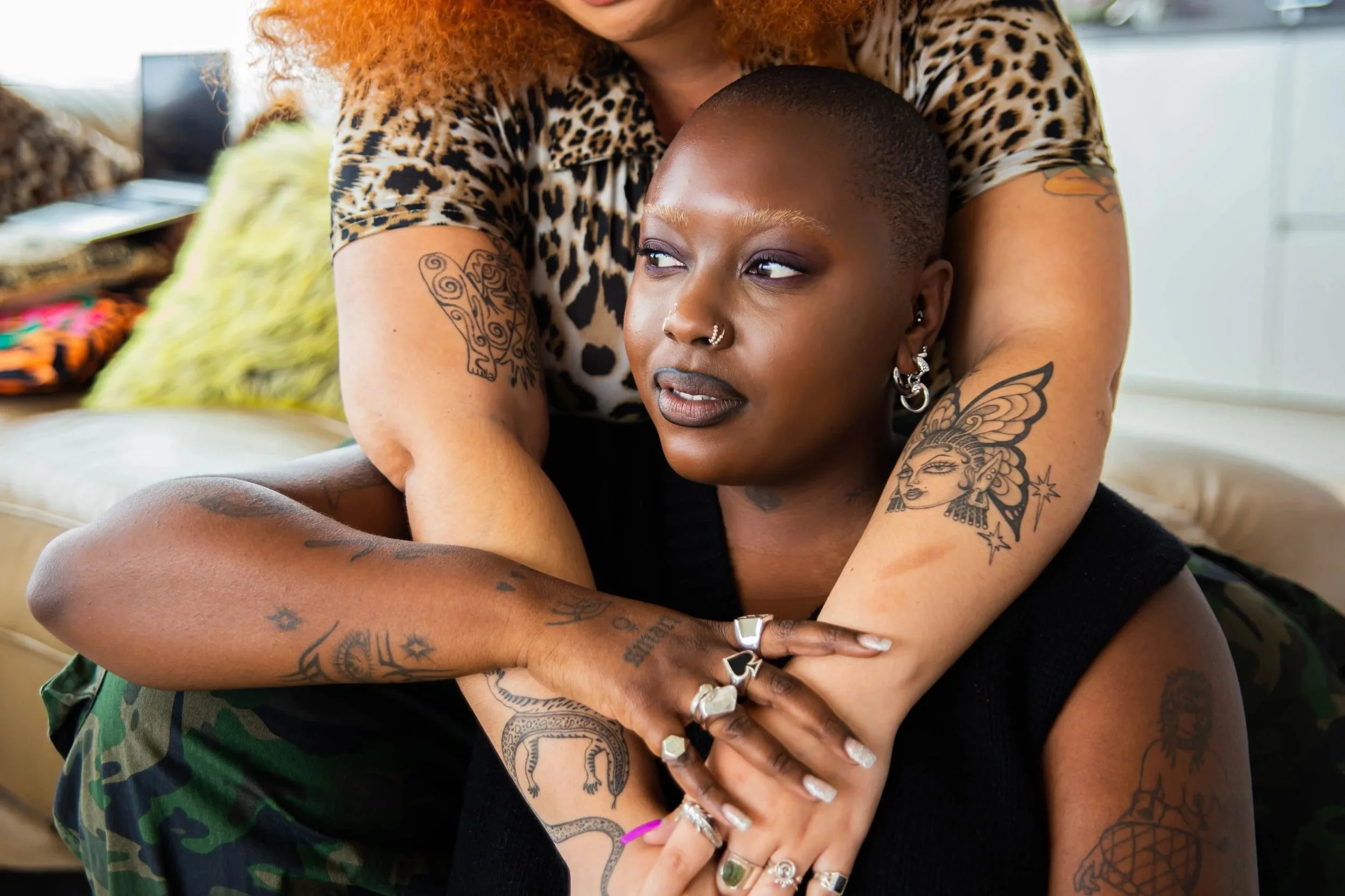
Some of the dynamics that are specific to queer survivors include:
Threats of outing: The abuser may threaten to out the survivor to their friends, family, community, or workplace. This could result in a myriad of negative consequences for the survivor, and is especially harmful for those who chose to stealth for their own safety.
Isolation/weaponization of their community: In many cases, a queer person’s chosen family may be the only support system they can rely on, due to ostracization from their blood families who do not accept their sexual orientation or gender identity. The abuser may choose to weaponize their shared community against the survivor. This may look like threats of no one believing them if they were to speak out, or manipulating the narrative by telling everyone that the survivor was actually the perpetrator.
Use of anti-LGBTQ bias against the survivor: If the survivor were to go to law enforcement, the abuser may use anti-LGBTQ bias against them. For sapphic relationships, an example of this would be assuming or claiming that the more masculine partner is abusive when they aren’t, reinforcing the idea that only masculine people perpetrate violence against feminine people.
Ridiculing or demeaning the survivor based on their identity: Using homophobic, transphobic, or biphobic slurs/rhetoric in a derogatory way, using anti-LGBTQ stereotypes against the survivor, or forcing them to dress/act a way that isn’t in line with their gender identity.
One of the largest barriers for queer people seeking help for domestic violence is the lack of awareness in how prevalent it really is in queer relationships. Many aren’t aware of the fact that women can perpetrate violence against other women, view it as mutual or consensual, or consider it less significant than violence perpetrated by a man. Internalized stigma may also contribute to the survivor not reaching out for help. Hearing from jurisdiction or society that being queer is wrong may result in self blame or guilt, which may make them believe that the abuse is warranted or even deserved.
Additionally, queer spaces in smaller cities and rural communities can be few and far between. The lack of queer spaces/resources in these cities can pose an even greater threat of isolation if the survivor is outed or if the abuse is disclosed to their community.
How to Support an LGBTQ+ Friend Experiencing Domestic Violence
Showing up as an advocate for a queer survivor is almost identical to how you would for a cishet survivor.
The most important step is to believe them wholeheartedly. The barriers queer survivors face can make it all the more difficult to reach out for help, so if they do, know that they are trusting you to hold space for their vulnerability. It's important that you recognize that significance, and do your best to create a safe space for them to share their story.
Avoid using blaming language as they tell you about what they’ve been through. Keep in mind that it is okay if there are parts you don’t fully understand; avoid pressing questions about their identity/orientation and how it relates to the abuse, as this could be counterproductive to the conversation at hand. The best way for you to make them feel heard in this instance is to stay present and listen as they share their story with you.
Help them identify when they feel most vulnerable, and identify the people in their community who they can feel comfortable talking to about their situation. Help them find resources in their area that are LGBTQ+ affirming, and if possible, help them attain those services if that is the path they decide to take.
Lastly, continue to offer your support. Assuring that you will always be there for them can make the world of a difference in the lives of a survivor, and will help reassure that they are deserving of real love, dignity, and support.
Queer Affirming Resources Serving Dallas, Texas
Genesis provides free emergency shelter, advocacy, legal support, and counseling to women and children who are survivors of domestic violence, including sapphic and trans women. Providing education about domestic violence to anyone who needs it is an integral part of our mission; anyone who calls our helpline to learn how they can help a loved one will be met with compassion and provided resources suited to the situation at hand. If you are a woman in the LGBTQ+ community in an abusive relationship, there is help for you. Call or text our 24-hour helpline at 214.946.HELP (4357) when you’re ready.
As we close out this Pride Month, we want to commend just a few of the amazing non-profits who are making an active change in the queer community today. We want to thank those who have continuously shown up for marginalized people in our community, and commend the work that they’ve accomplished.

Queer survivors: we see you, and we stand with you.
Resource Center - A Dallas based non-profit that provides health care, HIV/AIDS services, affordable housing for LGBT+ seniors, community wellness programs, and safe spaces for queer individuals.
Dallas Hope Charities - Provides transitional housing, life skills training, and community for unhoused LGBT+ young adults.
Out of the Closet - Non-profit thrift store on the Cedar Springs strip benefitting AHF Wellness, a testing center that provides free, confidential STD/HIV testing/treatment to anyone who needs it.
The Trevor Project - Provides crisis and suicide prevention services for LGBT+ youth.
Sources:Perrin , Ruth, and Anya Lynn-Alesker. “Working with LGBTQ+ Survivors of Domestic Violence, Sexual Assault, and Stalking.” Youtube. Om, 13 Jan. 2025, www.youtube.com/watch?v=gSv0WxUe32I.“Preventing and Responding to Domestic Violence in Lesbian, Gay, Bisexual, Transgender, or Queer (LGBTQ) Communities.” VAWnet, 2019, vawnet.org/sc/preventing-and-responding-domestic-violence-lesbian-gay-bisexual-transgender-or-queer-lgbtq.Written by Sydney Pendarvis, Design and Communications Assistant